Staff Members
In CLIENTXCMS, managing staff accounts is the core of your platform's administrative security. The objective is strategic: precisely control who can access the administration, define appropriate authorization levels and trace all administrative activities. Rigorous management of administrator accounts protects your system against unauthorized access and ensures clear accountability for actions.
This section allows you to create, manage, and monitor all accounts with access to the administration interface.
You can manage staff members from:
Settings > Security > Staff Members

Each administrator account is an access key to your system. Treat them with the same care as your house keys — limit the number and monitor their usage.
Why manage staff accounts?
Administrator management is essential for:
- Securing access to the administration interface
- Distributing responsibilities according to roles and skills
- Tracking actions for audit and accountability
- Limiting risks related to compromised accounts
- Facilitating collaboration in teams with appropriate access
It's like managing access to a safe 🔐 — each person should have exactly the rights they need, no more, no less.
Creating a Staff Account
Creation Process
To add a new member to your administrative team:
- Click the "Create" button in the top right
- Fill in the creation form
- Define appropriate permissions
- Validate the account creation
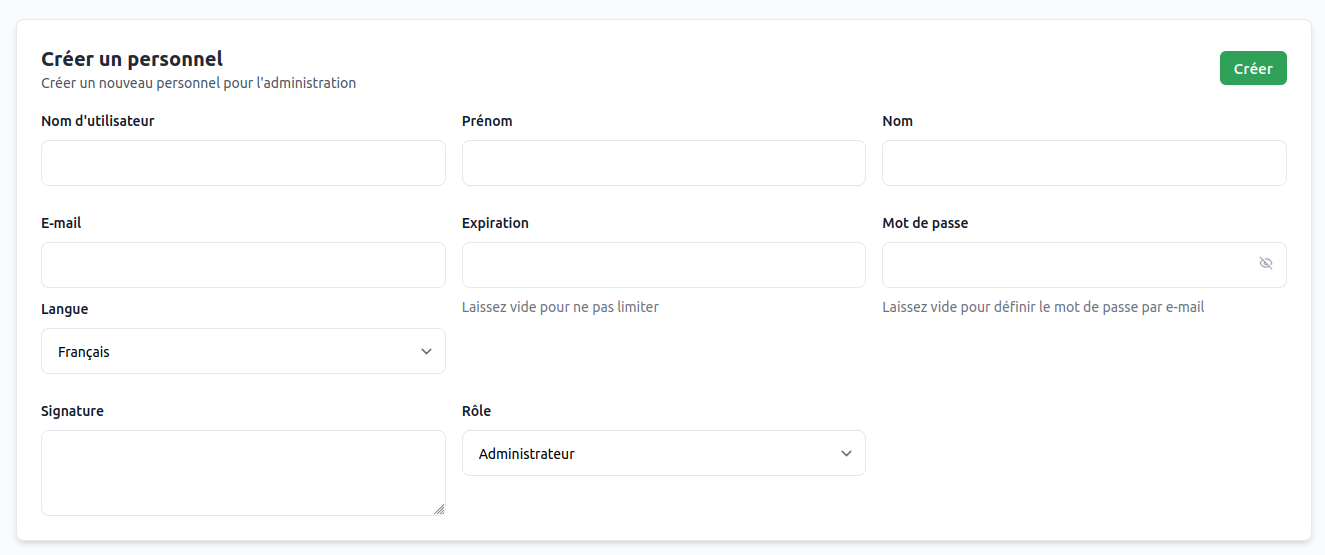
Account Information
Username | (unique text) Unique identifier for this administrator account. Use a clear convention (firstname.lastname, initials, etc.).
First Name | (text) Person's first name for identification and personalization.
Last Name | (text) Last name for complete identification.
Email Address | (unique email) Professional email address used for:
- System authentication
- Important notifications
- Password recovery
Access Configuration
Password | (optional) Set an initial password or leave blank to send an activation email.
- Password defined: User can log in immediately
- Empty field: An activation email will be sent
Expiration Date | (optional) Sets a usage deadline for the account.
- Empty: Permanent account
- Date set: Access automatically revoked on this date
- Use temporary accounts for external contractors
- Set expiration dates for internships or short-term assignments
- Regularly review expiration dates
Customization
Language | (dropdown menu) Display language for the administration interface for this user.
Signature | (text) Custom signature used in:
- Support ticket responses
- Official communications
- Generated reports
Role | (dropdown menu) Defines the user's permissions and access to different sections.
Modifying an Account
Modification Interface
Access an account's details to modify it:
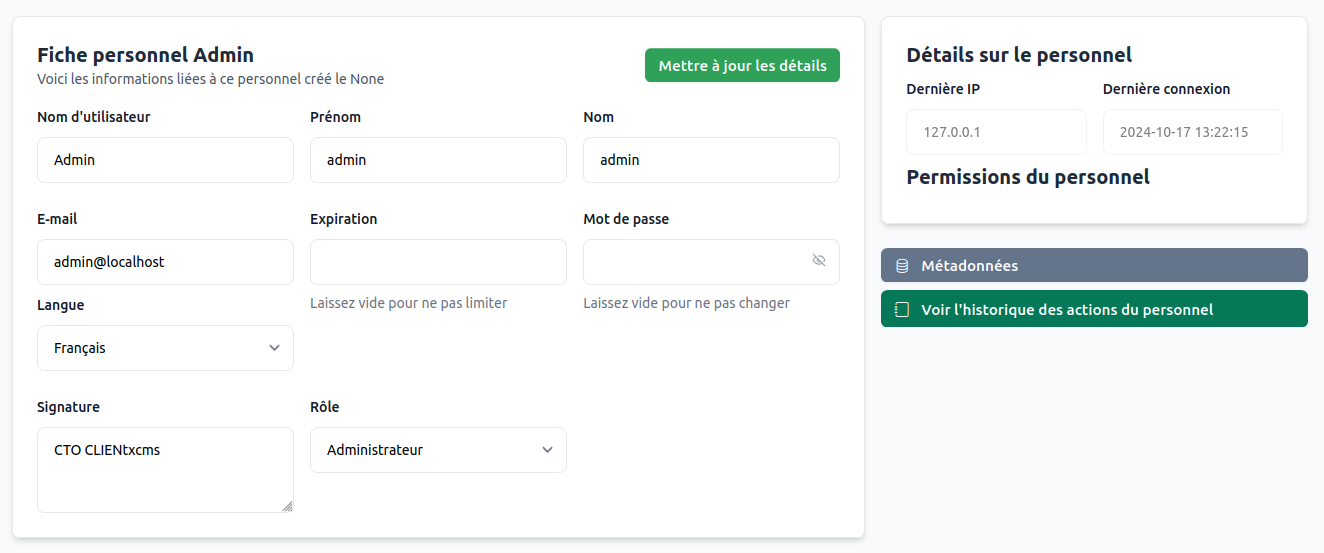
Common Modifications
- Role change: Promotion or limitation of access
- Information update: Email change, name, etc.
- Expiration extension: Extending temporary access
- Password reset: In case of forgotten or compromised password
Any modification to an administrator account is tracked and timestamped. These actions are visible in the action history.
Monitoring and Audit
Login History
Each account has a detailed login history:
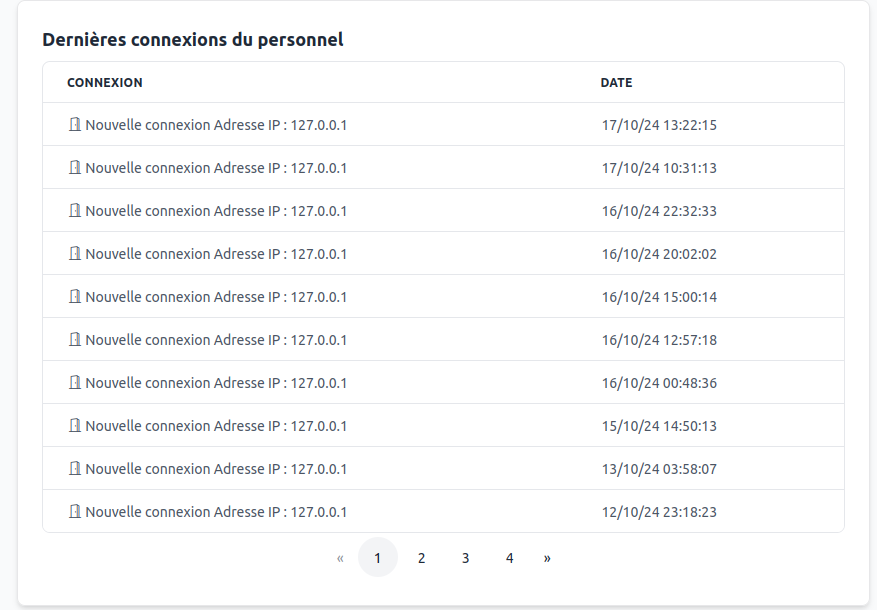
Tracked information:
- Login date and time
- Source IP address
- Browser and operating system
- Session duration
- Failed attempts
Action History
Monitor all actions performed by each administrator:
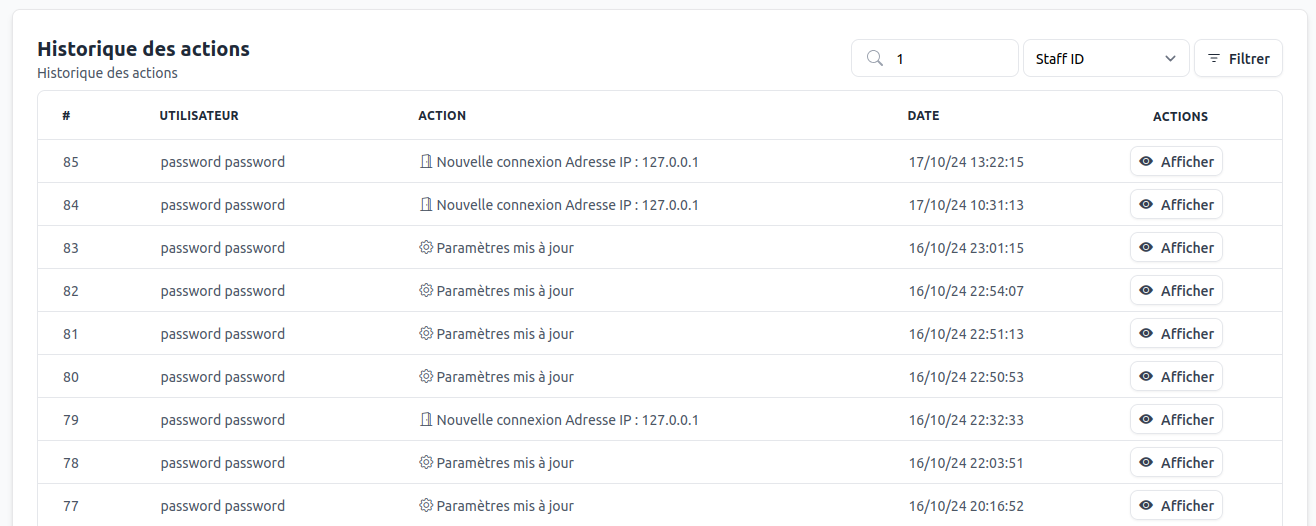
Recorded actions:
- Configuration changes
- Customer and service management
- Invoice actions
- Store modifications
- Access to sensitive data
Behavior Analysis
Use this data to:
- Detect suspicious activities
- Audit important changes
- Identify training needs
- Optimize team processes
Password Management
Email Reset
Recommended method for recovery:
- On the admin login page, click "Forgot Password"
- Enter the account's email address
- A reset link is sent by email
- The user clicks the link and sets a new password
Advantages:
- Secure and automated process
- No manual intervention required
- Compliance with security policies
Manual Reset (Emergency)
In case of problems with the email method:
This method requires direct database access and should only be used in cases of absolute emergency.
Steps:
- Access PHPMyAdmin (see Database section)
- Generate a strong password at motdepasse.xyz
- Create the bcrypt hash at bcrypt.fr
- Execute:
UPDATE admins SET password = 'generated_hash' WHERE email = 'email@admin.com' - Inform the administrator of the new password
Account Deletion
Deletion Procedure
To permanently delete an account:
- Click the red "Delete" button in the list
- Confirm the action in the dialog box
- The account is immediately deactivated
Consequences of Deletion
- Access revoked: Cannot log in
- Sessions closed: Immediate disconnection if logged in
- History preserved: Past actions remain tracked
- Irreversible: The account cannot be restored
Rather than deleting, consider:
- Temporary deactivation with a past expiration date
- Role change to a level without permissions
- Archiving to preserve history
Staff account management is a balance between security and practicality. The more rigorous you are in access management, the more secure your platform is. Monitor, audit, and regularly adapt according to your team's evolution.